
How I Build a Writing Workshop
Prioritizing empathy in a post-Iowa landscape

My first substack article was a guide on how to be a good workshop participant. I still think those are important points to keep in mind. However, much of the health of a workshop space is the responsibility of the facilitator, not of the participants. You are the one that establishes and enforces the boundaries that are required for the kind of risk-taking and honesty that makes a good workshop.
The following are some tools I’ve found really helpful when starting a new workshop. These methods have been put to the test both in a university setting and in a community setting, but of course might not apply to your specific situation. As always, follow my advice with caution.
1. Let your participants have some input on your workshop guidelines
People are more likely to follow rules if they have some idea of why they exist. I would assign an essay, usually this one, about workshop structure. Then we would collaborate on a list of guidelines and boundaries that would stay in place for the rest of the workshop.


I would start by giving participants some goals that writing workshop guidelines might accomplish (seen in the images above, but can be summarized as “to provide good feedback, to preserve the writer’s vision, and to make good use of time”) and then categorizing suggested guidelines by goal.
I have a few that I add every time (“be respectful,” for example) but the rest are suggested. Here are some key points you should pose to your group:
How much should the writer speak while their work is being discussed?
Should everyone be required to speak? Will you keep track? (especially important in educational settings)
How should praise be handled? What methods might you use to ensure feedback feels balanced?
How to you prevent one member from dominating each discussion?
Once you have this list, don’t be afraid to add to it or change it as the needs of the workshop change.
2. Do a practice run
Let participants give feedback a try with no stakes. After you set up your guidelines, run a mock workshop with a piece of writing not written by any of your participants. My go-to was always celebrity poetry as it feels fresh enough to be easy to make suggestions about but the writer isn’t particularly vulnerable or accessible. My favorite mock workshop poem was “Way-finding” by Supernatural actor Misha Collins:
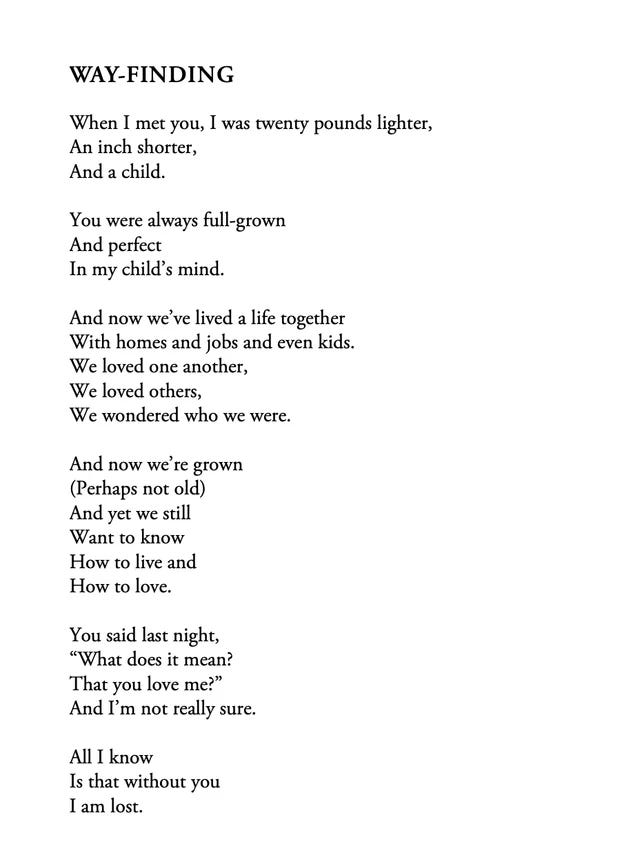
Plenty of places to make suggestions and I think Misha can handle it. I know some brave souls that would use their own work here but I don’t suggest it. This should be a place with zero emotional stakes so they can feel out what kind of feedback is actually helpful. Also that sounds like torture.
In an academic setting, I would follow this up with a little writing prompt that encourages participants to consider the feedback their fake peer has received and make some edits to the poem. The goal here is less about learning to edit but about learning what kind of feedback is actually useful.
3. Enforce agreed-upon guidelines
As a conflict-avoidant girlie myself, I understand the hesitation. But it is critical that you uphold the rules you agreed upon at the start of the journey. This protects your participants and keeps conflict between writers to a minimum. I would project the guidelines behind me during workshop and when someone was nudging up against a guideline, I’d just pop in and point to the projection. Usually this was received gracefully, especially if I maintained a lighthearted tone about the whole thing.

You might still upset someone, and that is okay. Remember that the guidelines were a group-created contract that everyone agreed to at the beginning and do your best to adhere to it with compassion and firmness.
4. Be militant about time
Be transparent about how much time each writer gets and stick to it. There is nothing that sours a group dynamic more than an uneven distribution of workshop time. I’ve seen this play out at the graduate level and it was not pretty. Give warnings when discussions need to begin wrapping up and ensure you’ve built your schedule so that each writer has an even amount of workshop time.
When you plan your sessions, if your workshop is in the 10-15 person range, it might be helpful for folks to get workshopped on alternating weeks to ensure everyone gets their time. Play with order, buffer time, and on-screen timers if you begin having issues.
Try your best to begin and end your sessions in a timely manner as well: remember that your participants have lives outside of the workshop and schedules that need to be respected. In turn, try to impart on your participants how important it is to arrive on time: no one wants to open a creaky door and unpack their bag while someone is reading a personal piece of writing. It is mighty awkward.
5. Remember that instructors are still human, and remind your writers of that
bell hooks says in her essay “Engaged Pedagogy,” “I do not expect students to take risks that I would not take, to share in any way that I would not share.” I don’t mean that you should offer up your own writing, but you should offer up your own lived experience.

I was honest in my classrooms and workshop spaces about things I struggle with as a writer, my own person biases, my failures, and even occasionally the wounds that I often went to when I did write. I kept up the personal boundaries that I wished to keep up, but I didn’t try to put an authoritative wall up between me and my writers. It provides a great foundation of trust for those difficult conversations that can crop up in a workshop.
6. But still… it isn’t all about you
Some blunders I have witnessed (or committed) that did not go well:
An instructor assigning her own writing to be analyzed (yikes)
An instructor set on being close friends with their writers
An instructor being super uncomfortable with or outright banning disagreeing opinions
Self-serving lectures that overtake workshop time
I don’t think most people encountering this page will have these kinds problems, but just keep in mind that the space should serve the writers and not only yourself. Be critical about your pedagogical choices and try to serve your participants first and foremost.
7. Ask for feedback!
The best way to ensure your workshop is going smoothly is to ask! Often, I would send out surveys about midway through a semester to anonymously ask for feedback from participants. This helps me balance any outside work, change workshop guidelines, and guide me toward topics my students are actually interested in.
It can be great to survey your participants before you meet as well to help you structure things ahead of time. This also sends the message that you care about your participants’ input, which does a lot to build rapport.
8. Allocate enough time to read writers’ work (if that is part of your workshop structure)
Depending on the size and genre of your workshop, reading can be a huge time sink. Still, like I said in the workshop participant article, it is important to read each piece multiple times and provide thorough feedback. Some opt for letters, others for annotations (I prefer this for poems especially), but whatever your method, give yourself the time to do it well.

I would usually give myself about two hours for a set of six poems, but your milage may vary. Workshopping in groups, as mentioned above, can also help manage your workload. If you do get behind (it happens), be honest with your writers and take a few extra days to ensure the feedback is up to your usual standard as opposed to rushing. Trust me on this one, I have been there!
9. Play to your strengths
My friend (and talented poet) Lily Someson had a pretty robust yoga and meditation practice in graduate school and would start her workshops with a short stretch and though exercise. A professor I knew had a background in art history would assign ekphrastic exercises that involved visual analysis. I am a bit of a nerd about linguistics, so I usually include a lesson about types of sound and sound symbolism in each workshop I teach.
This is what makes each workshop truly beneficial for your writers: exposure to new experiences and information! These are often the things I remember the most about the workshops I attend and what I get the most specific feedback about. Don’t feel like you need to stick to the basics at the cost of your personal identity.
10. Don’t freak if things go a bit wrong
Workshops are very emotionally heavy spaces that can encourage the wrong kind of competitive energy. Even if you began with the most engaged of pedagogy, your participants are bringing their own baggage to the table every time and you cannot prevent all conflict.

Do your best to be fair and remember that these people have full, complex, human lives outside of the writing workshop that might be affecting them negatively. I have had workshop facilitators that I felt did everything right that still were thought of as authoritarians by my peers—some things are just out of your control. Don’t be afraid to ask for help (my chat and comments are open!) and don’t blame yourself for every break-down-in-tears moment. Those just happen sometimes.
This should get you started! There is plenty more to cover and I encourage anyone starting up a workshop to reach out to me in my chat or in the comments. I would also encourage folks to read about a couple of different workshop methods and their benefits, especially the Liz Lerman Critical Response Process which I borrow from heavily. There is no single right way to run a workshop: as long as you care about people and about writing, I’m sure it will be a boone to all involved.
I’m thinking of writing another article just focused on some workshop nightmare stories and I’d love to hear yours if you got em’. I’ll never forget having to rank my peers poetry once… oof. I can’t believe we made it out of that friends! Anyways, tell me all about your workshops in the comments.
Holy cow. Banning dissention/disagreement sounds like a miserable time. Good tips in here, both to do and to avoid 👍